Followers

Rethinking Christmas


 Like everything else this year, Christmas is different. A year ago I could never have imagined this. No Christmas or New Year’s Eve parties. No carol services or Christmas fetes. No Santa’s grottoes. Winter Wonderland closed. Churches barely open. Carol singing banned. Shops almost empty. ‘Closing Down’ signs on every corner. Pubs no longer allowed to sell alcohol and forced to close at 6pm. The shops and cafes rattle out their usual tinny selection of schmaltzy Christmas pop songs, but nobody’s heart is really in it. I’m only glad my daughter doesn't believe in Santa any more because this year I don’t think I could be bothered to keep up the facade. Money is tight and she knows it’s going to be a quiet one, as do we all.

This year for the first year ever we’ve made the difficult decision not to spend Christmas with either set of parents. It feels like the end of an era. Our decision has been made doubly difficult but the fact that neither sides of the family are particularly well. But weighing up the statistical liklihood of catching and passing on this virus, especially when travelling and passing through busy service stations, we reluctantly realised that it is just not worth the risk for a day or two of festivities. For the first year I will be posting all my presents. And we will be spending a quiet family Christmas at home.

This raises all sorts of questions. What will a quiet family Christmas look like? Up until now, we’ve always followed my family’s traditions, which have largely centred around accumulating a large pile of presents and ripping through wrapping paper like vultures, before eating far too much turkey and falling asleep. I have decided, first and foremost, that this year rules and expectations do not apply. In 2020 I’ve had quite enough of people telling me what to do. So this year, if we want to get up at midday and spend the day in pyjamas, or eat takeaway fish and chips instead of if turkey (Steph’s suggestion) who is to say we shouldn’t? In fact, I’ve decided to dress up to the nines, mostly because I miss dressing up. But Steph wants to stay in pjs, which is also fine. We'll probably have some kind of roast, but no sprouts because why should I?

The things I miss most of all are the little rituals. Candlelight service on Christmas Eve, and walking home arm in arm in the dark, singing carols. I feel the need for some kind of ritual, not necessarily Church or Christian, but something meaningful and perhaps symbolic of light flooding the darkness. This year, of all years, it feels necessary to chase the darkness away. Believing in hope, in light, in love. Resilience becomes an act of defiance.

This year I have put up only the decorations I love, and no more. I’ve ditched the glitzy plastic dangling décor in favour of natural greenery, tinsel and lots of fairylights. Everything on the tree has personal meaning for me. There’s a model of a Mari Lwyd, two wrens (both Gower traditions), a fairy, a Green Man, and lots of tiny musical instruments. These represent the things and traditions I love. I’ve hand-drawn cards for special people. Because I’m not sending so many gifts, I’ve spent more time carefully selecting them, from small local shops I love, and wrapping them prettily. Toned down Christmas doesn't have to feel like a let-down. In fact, it feels special, more thoughtful.

The thing is, without all the glitz and the razzmatazz, it’s easier to see through the commercial haze, and rediscover a side of Christmas I’d almost forgotten. Because Christmas, of course, has humble origins. It’s framed around the story of a helpless baby born to a teenaged mum, in a stable, of all places. Visited by shepherds. There were kings, too, but they came later, and brought with them new dangers, forcing the mum and the dad and the baby to become asylum seekers, fleeing a tyrant ruler.

The Magnificat, Mary’s famous song, encapsulates this. The Church often portrays Mary (and women in general) as submissive, but these words give a glimpse of something very different. They are, in their quiet way, revolutionary. They speak of a new way of living, which overturns the rich and tyrannical and uplifts the poor and humble:

“He has performed mighty deeds with his arm;

he has scattered those who are proud in their inmost thoughts.

He has brought down rulers from their thrones

but has lifted up the humble.

He has filled the hungry with good things

but has sent the rich away empty.”


All of this is framed, of course, amid a pagan celebration of the breaking in of light into the dark days of winter – The Winter Solstice, or Yule. Solstice means standing still. It was the time at which the Sun seemed to stop in the sky – the shortest day and the longest night, after which the days would start lengthening again. We still have many days of winter to go through, but the worst is over. Light is coming.


Whether we celebrate Christmas, Solstice or Yule, it's a time to be hopeful for the coming of Light into the world. Goodness knows, we need hope more than ever right now. It feels like so much of what we once took for granted has been taken away from us, and replaced by darkness and fear. But Christmas and Solstice tells us that this darkness can’t last forever. In the end, the Light is always stronger. Hope. Hope always prevails.


(Pic credit: Leon Oblak, on Unsplash pic. Used under Creative Commons License).

In The Offing...


I used the phrase 'in the offing' this morning and it's such an odd-sounding phrase I wondered what its origins were. It turns out to be an old nautical word. The 'offing' is the part of the sea that can be seen from land, excluding those parts near the shore. Someone who was watching out for a ship to arrive would first see it when it was 'in the offing' and expected to dock before the next tide.

I was born in Southampton and many of my ancestors were sailors. Before she moved closer to town, my Nanny Dolly used to live in a tiny house next to the docks and would watch out for her brothers' ships to come in. In those days, the only way they could receive news was by letter, so they would only have the vaguest idea of when they were expected. Their arrival was a big event, and they would be given gifts from exotic places, as well as Uncle Bill's tall tales of life at sea. I have an African-looking necklace Nan gave me that came from one of these visits, and my brother has an Indian bowl. It's interesting that in later years I've migrated to the sea. I've always felt happiest living in places close to water. It's in my bones, I suppose. Now, whenever I say the phrase 'in the offing' I shall think of my Nan.

Politics and Poetry in a Post-Truth World


“We live in capitalism. Its power seems inescapable. So did the divine right of kings. Any human power can be resisted and changed by human beings. Resistance and change often begin in art, and very often in our art, the art of words.” – Ursula K LeGuinn

‘Are you a political poet?’ is something I occasionally get asked. My two favourite conversation subjects are politics and poetry (plus religion…perhaps this is why I never get invited to dinner parties!) I am definitely political. And poetical. But am I a political poet?

I never set out to write political poetry. I just write about the things that matter to me, the things that grab me by the heart and twist it, the sorts of things that if I didn’t write them down would bubble around in my head and probably explode. My husband says I am becoming angrier as I get older. He blames it on the Socialism and the Poetry. But it’s not that. It’s just that there’s so much to be angry about right now, I can’t help it. The chaos and mishandling of the Covid pandemic, the massive inequalities in society, a rising acceptance of food banks as the norm, massive job losses, mostly among the working classes, a public sector pay freeze at the same time as the Government announces a massive increase in military spending, the looming spectres of Brexit and climate change. Trump and Boris. In such a world, how could anyone not be angry? 

At times such as this, all forms of art – and poetry in particular – are a way of dealing with and responding to the brokenness of the world. We tell our truths because we have to, because (to quote Martin Luther) ‘here I stand, I can do no other.’

The best political poems convey a kind of Truth which is timeless and universal. They go beyond the time in which they were written and reach into ours. They invite us to question universal, fundamental truths: What is our place in the world, and who decided it? Does our society create the realities we strive for, and if not, how can we make things better?

 Leon Trotsky writes, in Art and Politics in our Epoch (1938): ‘Generally speaking, art is an expression of man’s need for an harmonious and complete life, that is to say, his need for those major benefits of which a society of classes has deprived him. That is why a protest against reality, either conscious or unconscious, active or passive, optimistic or pessimistic, always forms part of a really creative piece of work. Every new tendency in art has begun with rebellion.’

It is this restlessness – this call to rebellion – which fires us into self-expression. Art, and poetry in particular, is both a response and a challenge to the world we find ourselves living in. It can never be unbiased, because the very act of writing creates our own reality. The very best political poems both challenge the reader and inspire us to new visions.

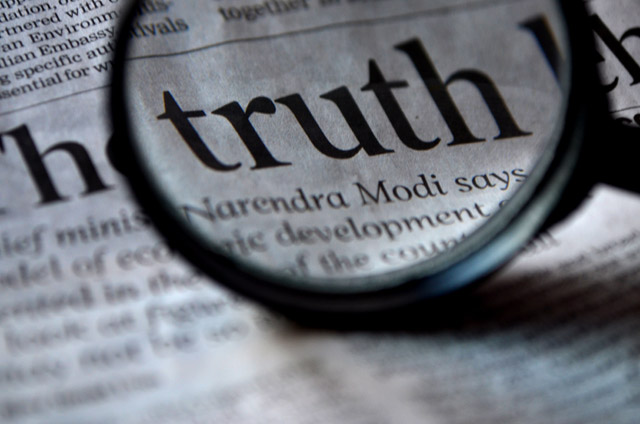
Whenever I try to define what is meant by political poetry, I keep coming up against this word: Truth. What is meant by truth? Are certain truths universal, or is the very nature of what we understand as ‘truth’ always changing? 

 Nietzsche, in his 1873 essay Truth and Lying in an Extra-Moral Sense argues that there is no such thing as absolute truth. People create the concepts through which they define what is good or just, and these values are changeable as they adjust to shifting cultural values and belief systems. We create our own ‘truth’ about the world through our use of metaphor, myth, and poetry.

We live in what’s often referred to as a ‘Post Truth world’. Post Truth is described in the Cambridge Dictionary as: 'relating to a situation in which people are more likely to accept an argument based on their emotions and beliefs, rather than one based on facts.' A classic example is Tony Blair's justification for the invasion of Iraq despite having found no evidence of weapons of mass destruction: ‘I only know what I believe’.

At a time when politicians routinely lie, change their minds and manipulate data to suit their own agenda, we are rapidly approaching what the writer Hannah Arendt (Lying in Politics, 1972), termed defactualization – a point at which falsehood becomes so commonplace that it is impossible to distinguish fact from fiction: 

“Truth or falsehood—it does not matter which anymore, if your life depends on your acting as though you trusted; truth that can be relied on disappears entirely from public life, and with it the chief stabilizing factor in the ever-changing affairs of men.”

 Truth is a recurring theme in my forthcoming pamphlet, Our Father Eclipse (April 2021) – the question of who we turn to for answers when all the ‘traditional’ pillars of authority – the State, the Church, Scientific impartiality – are no longer trusted. 

 At such times, it can be tempting to switch off the rational part of our brain and seek comfort elsewhere, to try to pretend that the ugliness in the world isn’t really happening:

‘Let’s put on some music,

Let’s dance to the End of Times, a dystopian waltz,

Let’s sing happy songs, think positive thoughts,

Switch off your mind and live in the Now,

Whilst all around us the world burns,

Whilst all around us, the people die.

The forest is on fire—

You write a poem

Praising the beauty

Of a tree. ‘


(from Beyond Borders, Our Father Eclipse)


The Russian poet Yevgeny Yinokurov (b.1925) addresses the issue of truths/untruths in his poem Lies:


‘Telling lies to the young is wrong.

Proving to them that lies are true is wrong.

Telling them that God's in his heaven

And all's well with the world is wrong.

The young know what you mean. The young are people,

Tell them the difficulties can be counted,

And let them see not only what will be

But see with clarity these present times…’


Good poets, like good parents don’t sugarcoat the truth. Readers know what the world is really like. Though it might grant us temporary relief sometimes to sink into a poem like a cosy old armchair, the world is not always comfortable or safe. We need to tell these uncomfortable and often painful truths if we are to remain honest.


Effective political poetry not only reflects reality in all its harshness but dares to challenge the many truths we have been conditioned to believe. The Italian poet Giovanni Giudici (b.1928) does this very effectively in his poem ‘You Ask Me What It Means’:


‘You ask me what it means

You ask me what the word

Alienation means:

From birth you start dying

In order to live through a master


Who sells you out; start co signing

What you have – power, live, hatred –

So that you may obtain

Sex, wine, heart-break


It means that you are beside yourself

But you think that you are

Just your own self, because

The wind undermines you, and you yield...’

There comes a time in everyone’s life (doesn’t there?) when you start to question the version of reality that has been fed to you. Perhaps even more so, in this time of pandemic and global unrest, where conspiracy theories arise to fill the gaping gulf between our expected future and the grim and frightening reality. At some point, you start to wonder if the dreams you were sold – of a capitalistic world filled with material luxuries which were yours for the taking if you worked hard and didn't think too much about where they came from or at whose expense – were even worth having. Or where you started to realise that the dreams you were sold were actually nightmares in disguise.

 Political poetry, at its best, picks at the seams of the perceived norm, whether it’s war poets challenging the harsh realities of the battlefield against the gung-ho heroic myths they were fed, or women challenging a patriarchally-structured society. Or poets of the Black Lives Matter movement, challenging a world in which people of colour are twice as likely to be stopped and searched, and more likely to be subjected to police brutality.

It’s at times like this when we find our voices – not necessarily because we choose to write political poetry, but because we have to, because we are angry at what we see and heart and pen give us no other option.

In a world where truth is a rare commodity, we need to sing, shout and write. We need to speak up boldly and honestly, with radical passion and revolutionary compassion, challenging social injustice, prejudice and inequality. And yes, if that occasionally makes me a ‘political poet’, then I’ll proudly own that title.


Rebecca Lowe is a freelance writer, poet and editor. Her debut poetry collection 'Blood and Water' is available from The Seventh Quarry Press, priced £6.99. Email: seventhquarry@btinternet.com

She can be found on Twitter as @BeckyLowePoet


Happy National Poetry Day! The theme this year is Vision, so here's a poem about one of my favourite characters (on whom I wrote my undergrad thesis), Hildegard of Bingen. Hildegard was a twelfth-century cloistered nun and Abbess, who, from a young age, experienced a series of strange visions. An artist, healer, composer and prolific writer she left a rich legacy or work behind her, including an early medical treatise (Causes and Cures), three books of her other-worldly and End Times visions, poems, and scores of music that broke all the normal conventions of her time. The picture is from one of her paintings. The phrase 'Feather on the breath of God' is Hildegard's own.

Hildegard

Listen –
My mind’s a jangle
Of words this morning,
My head a flash of light,
I have seen...strange things:
Dragon with many heads
And stars that whirl
And swirl to myriad music,
Things that make little sense
To you men of reason.
We nuns have been taught
To whisper through cloisters,
Silent, submissive;
That is not my way,
For the voice within me
Commands me to shout –
And shout I shall,
Against injustice,
Against your male
Dominion,
That still, small
Voice within me,
Rising, clarion call.
And I have seen...such things:
The greening earth
In vortex of ash and flame,
Spinning soul sucked dry,
A cloud formed like
The head of a mushroom,
Tell me...What does it all mean?
You call me small,
And despise my femininity,
Wishing me to fit the moulds
Your ancestors made for me.
A little woman, yes,
And yet one through whom
The voice of God is
Powerfully heard –
Rallying call
For the strange,
And the feared,
And the odd:
Feather on the
Breath of God.
We are living in such strange times at the moment! I haven't had time to update my blog recently, but here's a poem I've written inspired by recent events. I hope people like it and find it helpful:

What I Shall Always Remember
That impossibly clear, blue sky,
not a plane to be seen anywhere,
roads you could walk down,
devoid of the choking influence of cars
How the neighbours left their rooms
and rediscovered the beauty of being outside,
chalked artwork on garden walls,
playing music in the sunshine,
rainbow pictures in the windows
How we shared half-smiles
and offered, from a distance,
assistance to people we’d never
bothered speaking to before
How we learned to put
our own needs behind
the health and welfare
of others, how we cheered
those who kept everything
going – doctors, nurses,
care workers, bin collectors,
teachers, shopkeepers,
How, suddenly,
the world stopped,
became smaller,
turned inward,
causing us to rethink
and reflect upon
the things that really
mattered, how a wardrobe
full of fine clothes became
superfluous, how
toilet rolls, pasta and soap
became valuable commodities
How quickly we learned
the difference between
‘want’ and ‘need’,
and how disease
refuses to discriminate
between rich and poor,
How plush hotels
flung open their doors
to the homeless
How the churches
closed, and for
the first time, we
prayed like we really
meant it, and God
left the building
and hit the streets
And we fell to our knees
and got on with
the sacred task
of serving
one another.
By Rebecca Lowe, 27 March 2020

Cut and Paste Exercises


Last Friday, I decided to try something different. My daughter was off school sick, which meant cancelling all my plans. I couldn’t even go out of the house, and all I had to entertain us both was a pile of old newspapers and some biscuits. We ate all the biscuits, and then we started flicking through the newspapers. Then I spotted an interesting headline, and a line here and there and another. Before I knew it, I was chopping up the newspapers, making poems out of the lines. Yep, you guessed it, I had discovered Cut and Paste poetry!
Cut-up as a technique is, of course, nothing new. It goes back to the 1920s when, during a Dadaist rally, Tristan Tzara offered to create a poem on the spot by pulling words at random from a hat. Collage, which was popularized roughly contemporaneously with the Surrealist movement, sometimes incorporated texts such as newspapers or brochures. Prior to this event, the technique had been published in an issue of 391 in the poem by Tzara, dada manifesto on feeble love and bitter love under the sub-title, TO MAKE A DADAIST POEM.
It was popularized in the late 1950s and early 1960s by writer William S. Burroughs, and has since been used in a wide variety of contexts. Many famous writers have incorporated the cut and paste technique into the work, most notably TS Elliot in the Wasteland. Both David Bowie and Kurt Cobain experimented with cut-up techniques, writing their own paragraphs or poems and then cutting them up and reassembling them to create new and surprising lyrics. 

So here’s what I did:
1.      Select two newspaper articles at random. Longer features work best as they tend to include more descriptive words.

2.      Skim through and underline any particular words or phrases that catch your eye. Don’t think about the meaning, just choose what sounds interesting or surprising.

3.      Do this for both newspaper articles. When you have finished, either physically cut out or write down the words/phrases you’ve chosen.

4.      Reassemble the phrases from the two articles, in whatever order you like. This could be completely at random (drawn out of a hat) or, as I did, linking phrases which seemed to work together stylistically.

5.      Admire your new, shiny poem.

Some of my examples are given at the end.

A WORD OF WARNING: Borrowing other people’s words is plagiarism! There’s a very fine line between reusing a word in a different context and stealing somebody else’s work. So I’d recommend doing this only for your own amusement, not for publication. It’s about playing with words and having fun, remember, NOT stealing other people’s words and claiming them as you own!

Alternatively, make like David Bowie and try this method instead:

1.      Think of a subject, any subject. Let’s say, for the sake of argument, how to make the perfect cup of tea.

2.      Think of another unrelated subject, say how you felt in a recent relationship.

3.      Write a paragraph on each subject. Don’t think too hard. You want it to be a stream of consciousness.

4.      Cut up the lines of both and reassemble in a random order.

5.      Ta da! Your very own David Bowie lyric!


Here’s what happened, for example, when I combined a poem I’d previously written about the sea with a description of a friend suffering from depression:


Threnody

Blue and grey, rolling with rain,
And the darkness moved in,
Spreadeagled an invitation,
White limbs lost to a pitiless tide

Bent and twisted,
Tongued by lolling waves,
You shouted all night to keep the voices out,
An abandoned layer of bones,
Painted your arms red to feel something real

Whirlpool clouds made of steel and dust
Loom long and heavy on the other side.


NEWSPAPER CUT AND PASTE EXAMPLES:


Final Home/Love triangle
One the mudflats of the River Roach
A love triangle involving two giants,
The clear outline was produced
thanks to a drone fitted
with a specialist camera –

Clue of an adulterous relationship,
An enigmatic figure in the background,
Burgeoning romance,
Dangerously sexual feelings,
Darwin’s ship
Circumnavigating
A static watch vessel.

Google Doodle/Clocks Back
Nobody wants to go to and from work in darkness
A Google doodle may sound trivial
In the face of awesome creativity,
1.5 billion users active daily
So, winter is coming,
A twee-looking woman holding a notebook
Gazing up at the stars,
We could twiddle the clocks to achieve
All-year-round summer
She could almost be smiling,
The winter trees around her
Look almost festive –
A lipsticked woman holding a compact mirror,
The titles in swirling cursive:
Yes, ‘cheery’ was ironic.

A Load of Hot Air
I’m folding all my clothes wrong,
according to Mari Kondo,
I’ve consumed dubious tonics and teas –
Transformation to fluid experiments in style,
A painting made in extreme close-up.

Breathing is unconscious –
Inhale and exhale –
Staring at pale flesh with a
grim butcher’s intensity,

When I’m jostled by a rushing commuter,
Carving them up in the mind’s eye,
Fretted, fleshy tones and textured mottle,
bring me back to an even keel,

Silhouetted by the merciless dawn light,
Hands thrust in pockets,
The painter locks eyes with us
in the space beyond.


I Like the Stress of a City
Stark evidence of faultlines developing
Between hardline and conciliatory elements
Within the chaos,
Sending shockwaves,
Police armed with batons
Throw stones and flares, grappling.
You find your own oasis,
The white sands covered by the grey,
The catch is worthless and often dumped:
Every now and then
I fling it all up in the air
And see where it lands.


Autumn
The ivy strangles the
music from each folded vein,
The pulse of each contending thing,
The rhythms of rain,
Their striving shadows.

creative writing and mindfulness

The Levitating Altar of Oystermouth

  The Levitating Altar of Oystermouth It’s high summer time in Mumbles. A seagull screels overhead as tourists preen up and down the prome...